As a full-time digital artist, I've been looking for the perfect print-on-demand platform for years. I want to sell merch to my followers, but I also want to spend my time creating art, not wrestling with product templates or answering shipping complaints.
Over the past month, I ran a structured test. I uploaded the same set of designs to five popular POD platforms, created sample products, processed test orders, and evaluated everything from ease of use to product quality to profit margins.
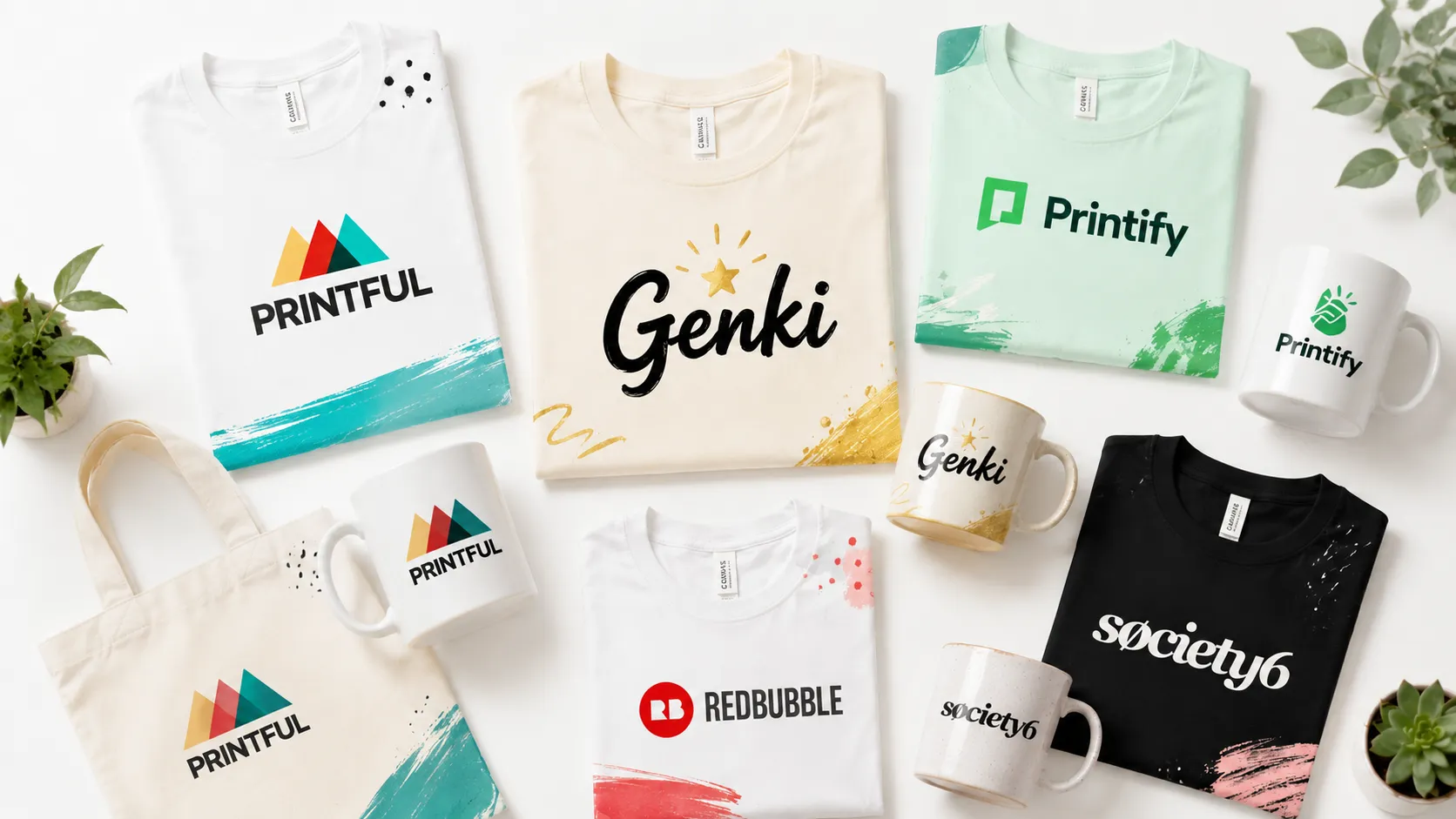
The platforms I tested are Printful, Printify, Redbubble, Society6 and Genki.
Here's my brutally honest breakdown: What works, what doesn't, and which platform actually delivered on its promises.
Testing Criteria: What I Measured
To keep this fair, I evaluated each platform on six factors that matter most to working artists:
- Setup Speed: How long does it take to go from zero to a live product?
- Design Automation: Do I have to manually format every single product?
- Product Variety: How many different items can I offer?
- Profit Margins: How much do I actually make per sale?
- Fulfillment Quality: Are the products well-made? Does shipping arrive on time?
- Customer Service Handling: If something goes wrong, who deals with it—me or the platform?
Let's dive in.
1. Printful
Printful stands out for its premium product quality, reliable fulfillment, and a massive catalog of over 300 items. However, this excellence comes with significant drawbacks: high base costs (around $13.50 per T-shirt) squeeze profit margins, and you remain entirely responsible for customer service.
Furthermore, the design process is highly manual, requiring about three hours to format just 10 products. Consequently, Printful is best suited for established creators who demand top-tier quality and don't mind the tedious setup.
2. Printify
Offering a more budget-friendly alternative, Printify appeals to creators with lower production costs ($9–$11 per T-shirt) and the flexibility of choosing from multiple print suppliers. Yet, this flexibility often leads to overwhelming supplier management and inconsistent print quality between factories.
Like Printful, the setup is highly manual and time-consuming, taking around 3.5 hours for 10 items. It remains a solid choice for budget-conscious creators willing to trade convenience and consistent quality for lower costs.
3. Redbubble
If convenience is the priority, Redbubble offers zero setup friction. Uploading your art once automatically applies it to over 70 products in just 20 minutes. It also provides a built-in marketplace for organic discovery.
The trade-off, however, is severe: you sacrifice all brand control, face a fiercely competitive marketplace, and earn tiny margins (typically $2–$5 per item). Therefore, Redbubble is best for hobbyists seeking effortless, albeit modest, passive income without the need for active marketing.
4. Society6
Similar to Redbubble, Society6 excels in automatic product generation (taking just 15 minutes for 10 products) and features a beautifully curated, high-end platform ideal for wall art and home décor.
Unfortunately, it suffers from equally low artist margins ($3–$8 per sale), limited pricing control, and frustratingly slow monthly payouts. This makes it an ideal fit for artists focused on the home décor niche who do not rely on merchandise as their primary source of income.
5. Genki
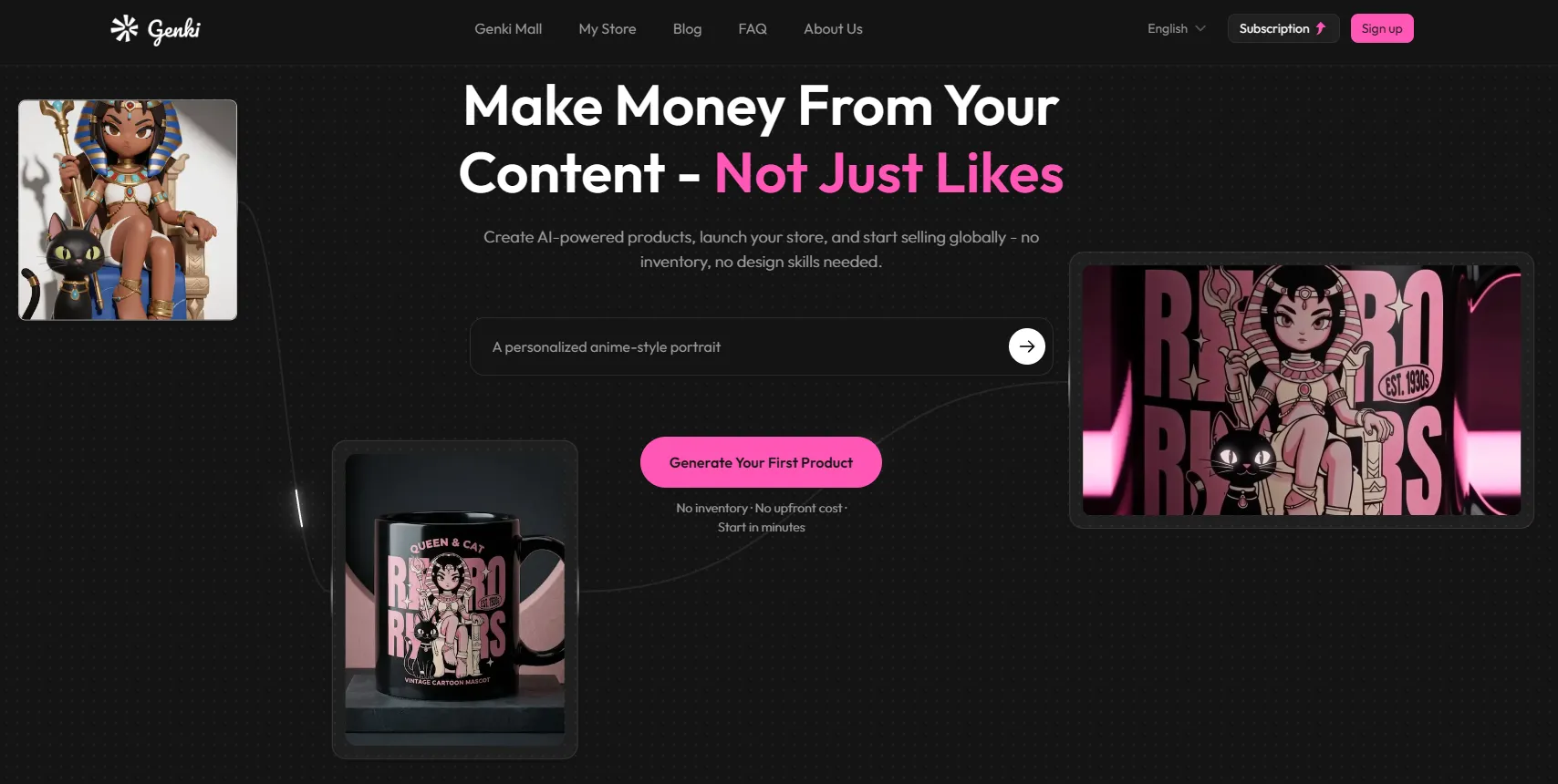
Finally, Genki emerges as an all-in-one solution specifically designed to eliminate traditional POD pain points. It features true automation, accurately formatting 10 products in just 10 minutes, and offers dual channels, allowing you to launch a built-in storefront or sync directly to an existing Shopify store to maintain brand identity.
Most importantly, Genki provides full-service fulfillment, meaning their team handles all customer service, refunds, and lost packages. Although it is a newer platform with a slightly smaller catalog and less brand recognition, its competitive costs and massive time savings maximize your effective profit. Ultimately, Genki is the perfect choice for creators who value their time and want genuine passive income without doubling as customer support reps.
The Verdict: Which Platform Won?
Here's my honest ranking based on real-world use:
| Platform | Best Feature | Biggest Weakness | Overall Score |
|---|
| Printful | Premium quality | Manual design work + high cost | 10 |
| Redbubble | Zero-effort setup | Terrible profit margins | 6 |
| Society6 | Beautiful curation | Low artist margins | 6 |
| Genki | Full automation + hands-off service | Smaller (but growing) catalog | 10 |
| Printify | Low production costs | Inconsistent quality | 6 |
My recommendation is, if you're a new creator or someone who wants true passive income, Genki is the clear winner. The automation saves hours, the dual-channel selling is genius, and the full customer service handling means you can finally "set it and forget it."
If you're an established brand with proven bestsellers and want absolute premium quality (and don't mind the manual work), stick with Printful.
If you're a hobbyist who just wants to throw art online with zero effort and doesn't care about margins, Redbubble works fine.
But for most working artists trying to sell custom merch without burning out? Genki hit the sweet spot of automation, quality, and actual profitability.
Final Thoughts
I spent years bouncing between platforms, always finding some critical flaw. Either the setup was too tedious, the margins were too thin, or I ended up spending more time on customer service than on creating.
Genki is the first platform that actually delivered on the "passive income" promise. I uploaded my art, connected my store, and started making sales without becoming a part-time shipping clerk.
If you've been putting off launching merch because the logistics feel overwhelming, give automation a shot. The POD landscape has evolved, and platforms like Genki are proof that you don't have to choose between quality, profit, and free time anymore.
Want to see how your art shine across dozens of products? You can give it a shot on Genki!
Related readings: